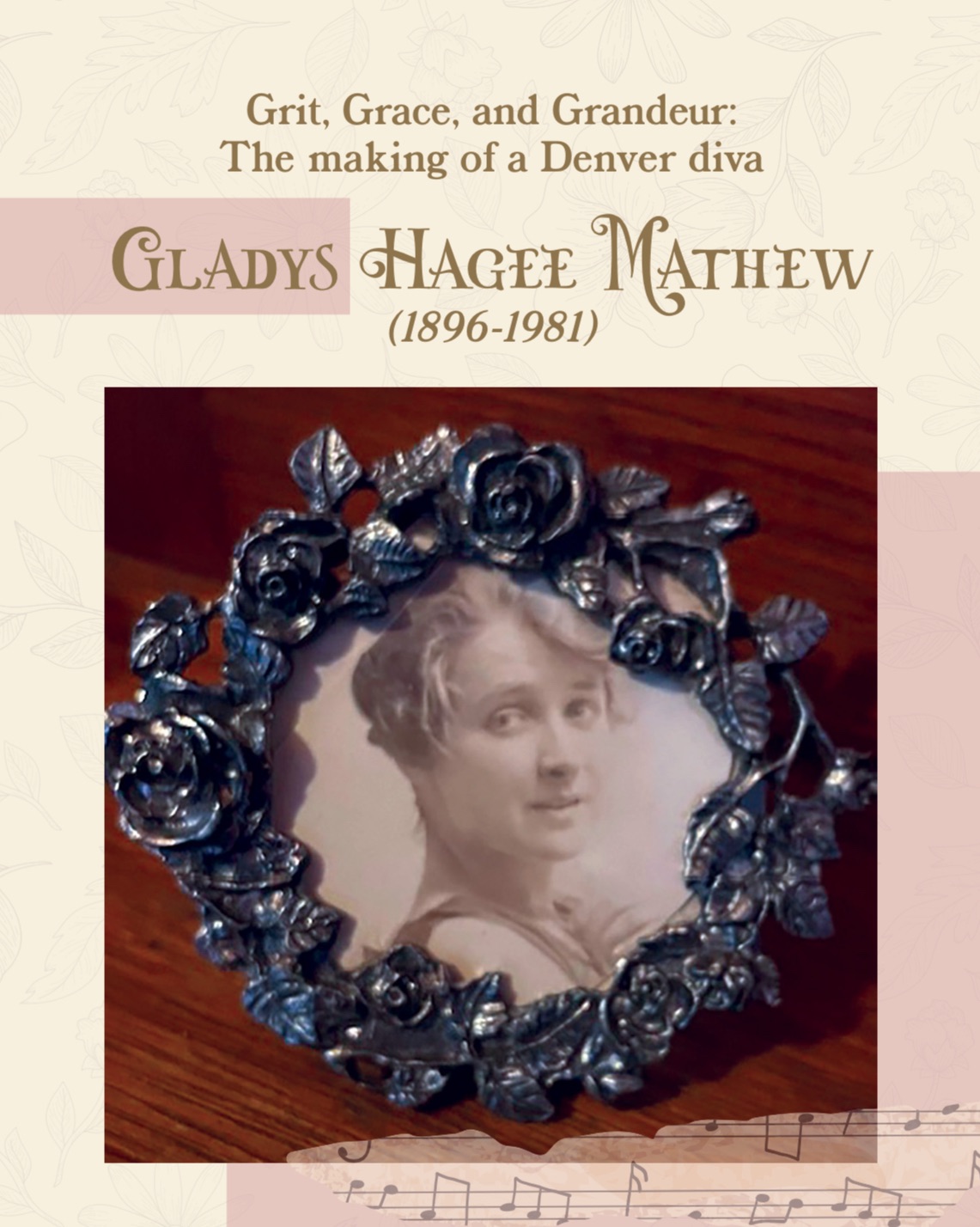
In 2023, I shared the fascinating story of my great-grandmother’s sister, Gladys Hagee Mathew, from her humble beginnings on the outskirts of Denver, an opera career that took her to Europe and New York and her marriage to a descendent of the British gentry, Steere de Montfort Mathew. In the early 1980s, their unique collection of antiques and historical documents ended up in Michigan, including items from the time of Queen Elizabeth I, sealed documents from the Church of England dating back as far as the 1700s, and an old silver spoon with unique markings.
A few clues regarding the spoon’s origins surfaced with help from a fellow alum at Hillsdale College. My husband, Chad, and I attended a lecture series last fall where we met John. John Abbott (‘92) shared an interest and depth of knowledge of history, antiques, and antiquities, so I shared Gladys’ story and later a few photos of the spoon’s hallmarks. Within a week, he emailed links to discussion boards about Sarl Silversmiths, including contact information for John Sarl’s great-great-great grandson.
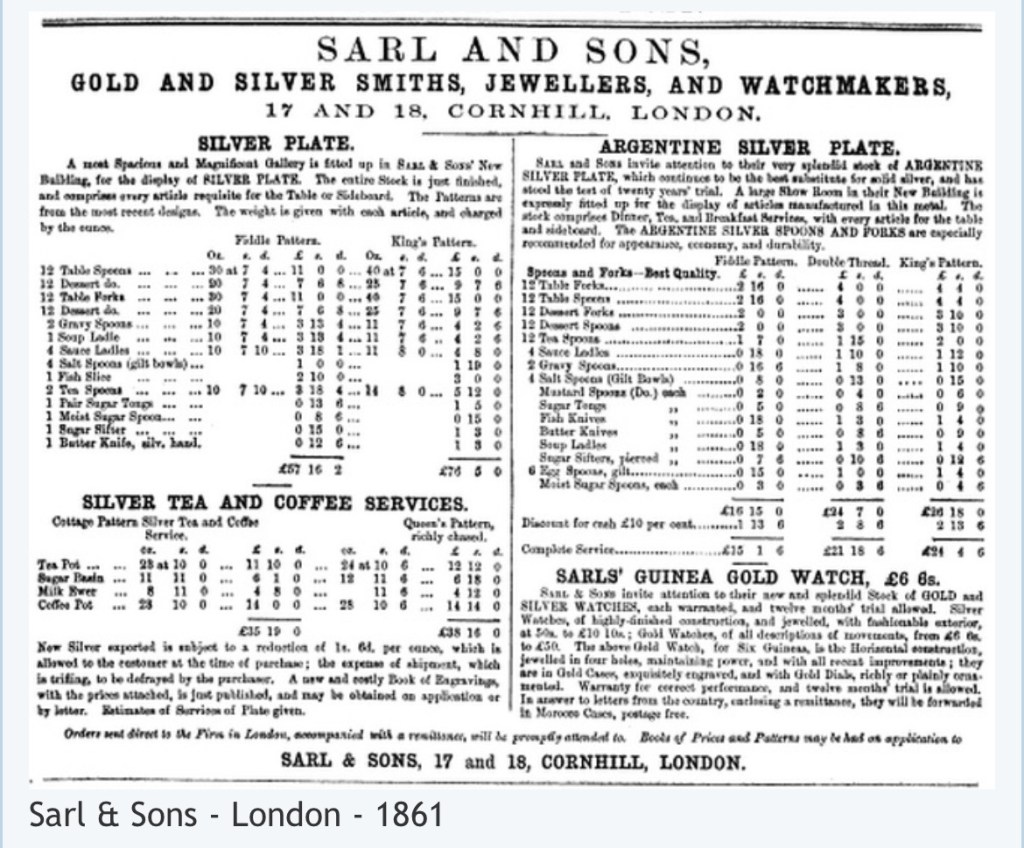
Mike quickly responded to my query, sharing the tale of his distant grandfather, John Sarl. John was born in 1788 in Southill, Bedfordshire. He enlisted at the young age of 14 to fight in the Napoleonic Wars. After sustaining an injury, John pursued several business ventures, including work as a silversmith and watchmaker from 1840-1865 in Cornhill, London.
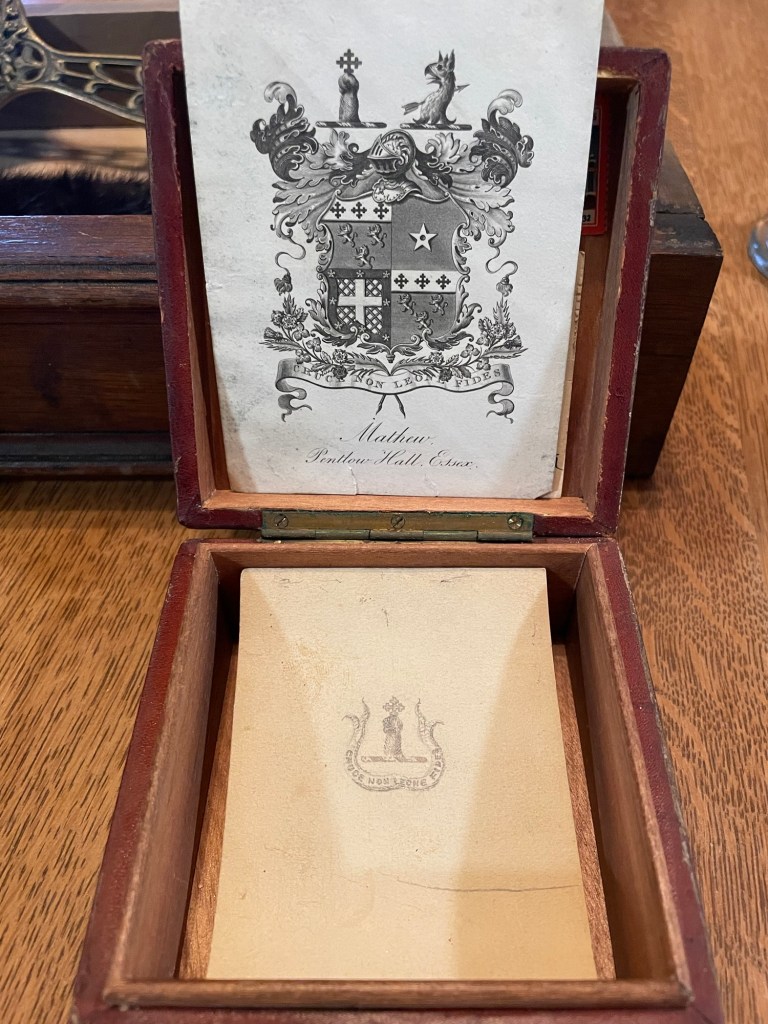
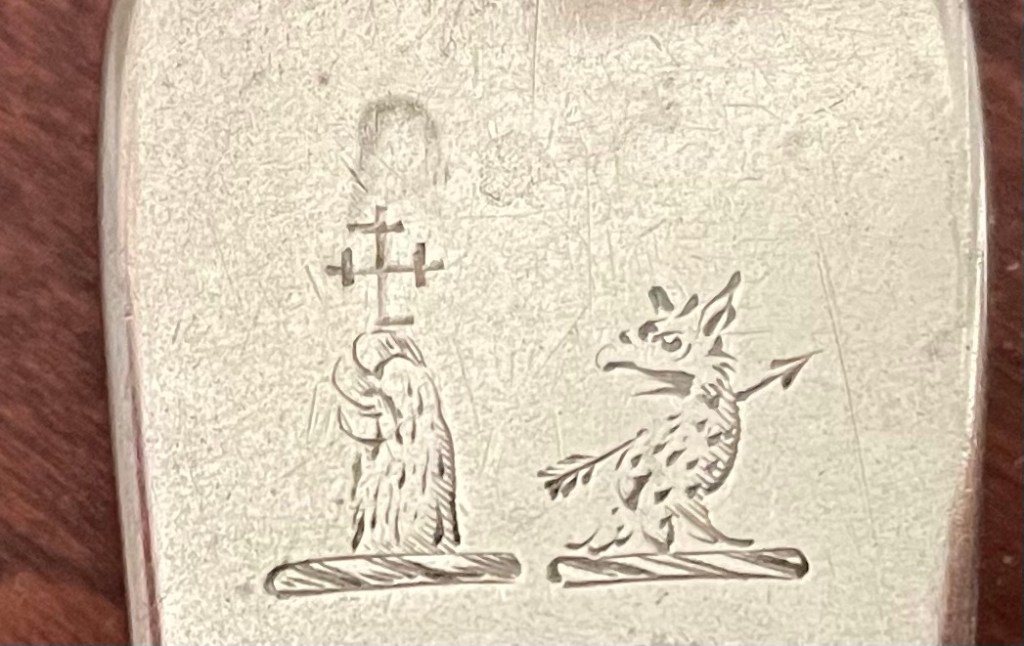
Another clue serendipitously emerged when organizing a desk drawer at home. I came across an old wooden box. Inside was a small handwritten note from 1931 and a sketch with writing across the bottom, “Cruce, non leone fides.” Part of the sketch looked similar to the markings on the old silver spoon. I researched the phrase and found another clue. The symbols (see picture below) are from the Mathew Family Crest, on the right, a griffin with a piercing arrow and on the left, a lion’s gambit, holding a cross. The family motto translates to “My trust is in the cross, not in the lion.”
My father also provided another clue. A few months before his passing in 2006, he penned a 20+ page family history, detailing the family’s roots in Colorado and how we ended up in Michigan in the 1970s.** These papers include a small section about Gladys and Steere. Apparently, the Mathew Family are descendants of Simon de Montfort (1208-1265), the father of British Parliament. Steere’s family tree offers additional clues through repetition of the same middle name carried by many of the men, de Montfort.
Some of Gladys and Steere’s collection (video)
Over the past few months with help along the way, I’ve narrowed down a time period when the spoon was made (1840-1865) and identified the markings on the handle from the Mathew Family Crest. As with any worthy historical journey, more questions and paths have emerged along the way. Next on this historical adventure: Start reviewing Aunt Gladys’ personal papers and verify the connection between the de Montfort and Mathew families. Perhaps a “recce” to England is required.
Merci beaucoup, John and Mike, and thanks for reading!
**Fun Fact: I was the first member of the family to be born in Michigan.
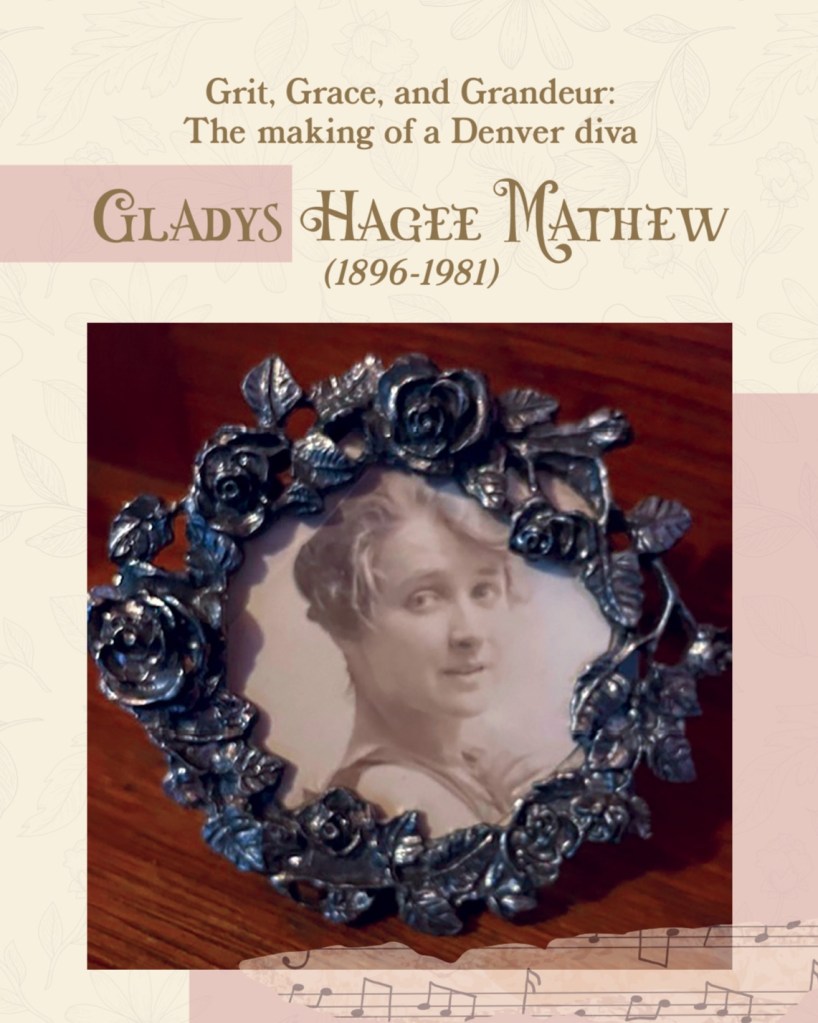
Thrilled to announce my new lecture and traveling exhibit, “Grit, Grace, and Grandeur: The Making of a Denver Diva!”
After three years of research, I’m excited to finally share the incredible story of my great-grandmother’s sister, Gladys Hagee Mathew. Born premature on the outskirts of Denver, she survived in a makeshift incubator, performed alongside the “who’s who” of the 1920s–40s music scene, and built an opera career that reached from New York to Europe. Her remarkable life is a tale of survival, musical excellence, and historical preservation, including a 500-year archive of Tudor-era treasures and American history.
📅 Now booking 2026 dates for museums, universities, libraries, and cultural organizations (virtual options, too).
👉 Interested in hosting? Contact Lien Public Relations.

 Cairn Hill Farms, LLC